

It’s a wonderful time to be alive – we’re more connected than ever, automation is giving us more time to do the things we love and, as customers, we’re able to tell brands exactly what we want from them. So why is the copy we’re reading sounding a bit…dead? Our Head of Copy, Rachel Escott, provides some much-needed brand-voice triage.
How you communicate is one of the most important parts of your brand identity, but it’s often overlooked in the rush to create stunning visuals, climb those Google rankings and jump on the next TikTok trend.
With so many plates spinning, you can see how messaging can slip down the pecking order. But rushing out generic and bland copy is a real missed opportunity – it makes your web content feel uninspiring, your socials sound all over the place and your emails, to put it bluntly, dead on arrival.
I’m on a mission to revive them!
Here’s why brand voice isn’t just a ‘nice to have’ and why without it, you’re just adding to the noise.
What is brand voice?
It’s how you communicate, through the written and spoken word. Although it’s sometimes referred to as ‘tone of voice’, I prefer ‘brand voice’ as the term encompasses the whole personality: what you say and how you say it.
From customer service advisors to your social media squad, your team are the ones who tell your story every day. Defining your voice will help them stay on-brand.
A good brand voice:
- Boosts brand recognition
- Improves engagement
- Delivers against your KPIs
- Makes your team feel part of something
Why is brand voice important?
86% of people say authenticity matters when deciding what brand they like and support. We humans are nosy creatures! We want to feel something when we speak to each other – and the same goes for our interactions with brands.
This is where your words shine. Be relatable, tell your story and really connect with what matters to your audience. Make them feel curious, validated, happy, secure, shocked, empowered – the full spectrum of emotion.
A brand voice that feels stiff, forced or unempathetic to customer wants and needs will either make your engagement tank – or worse, lead to viral infamy!
Keeping it consistent
We’re hardwired to switch off from conflicting messages. After all, it’s hard to build a relationship with a brand that’s displaying multiple personalities at any given moment!
If you say you’re a playful company but write like a legal footnote, it will instantly make people disconnect from your brand. Worse still, if you haven’t given your new team members the memo, speaking in a completely new brand voice is like opening the trapdoor under your audience.
Where do brand guidelines come in?
Adding a voice section to your brand guidelines is essential. Usually, your voice will be led by three or four values. For example:

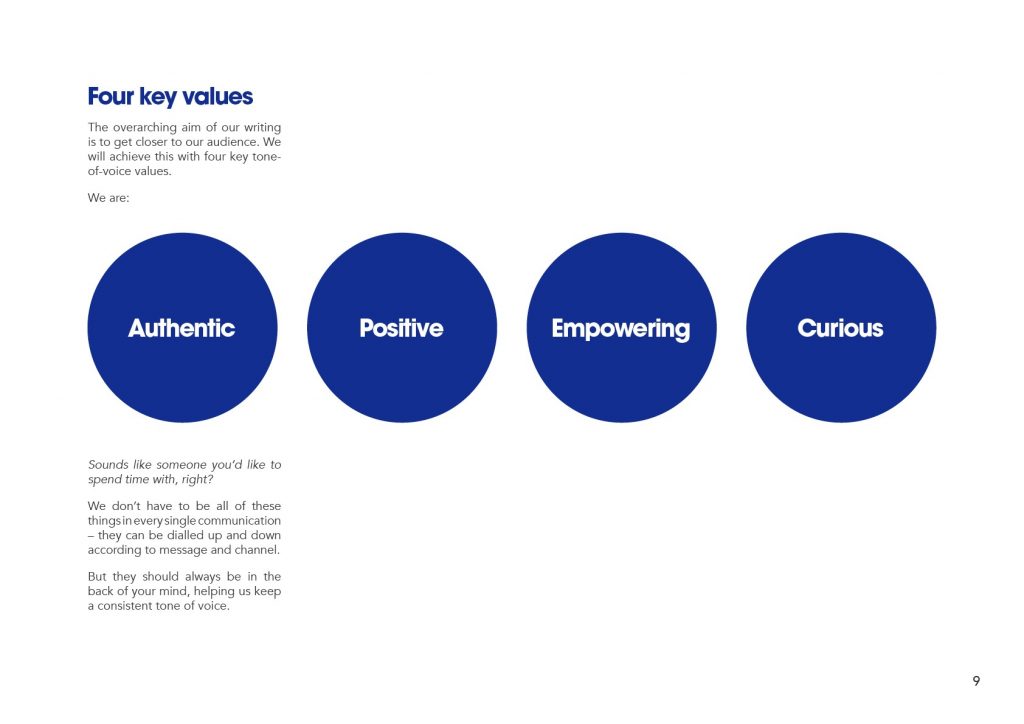
A snapshot of brand voice guidelines created for Closer Pets
It doesn’t mean everyone has to sound the same, or that every communication has to sound identical. It’s simply a rule of thumb.
The best brand voice guidelines will also show how these values can be dialled up and down for different scenarios, e.g. a funny social media post vs responding to a customer complaint email.
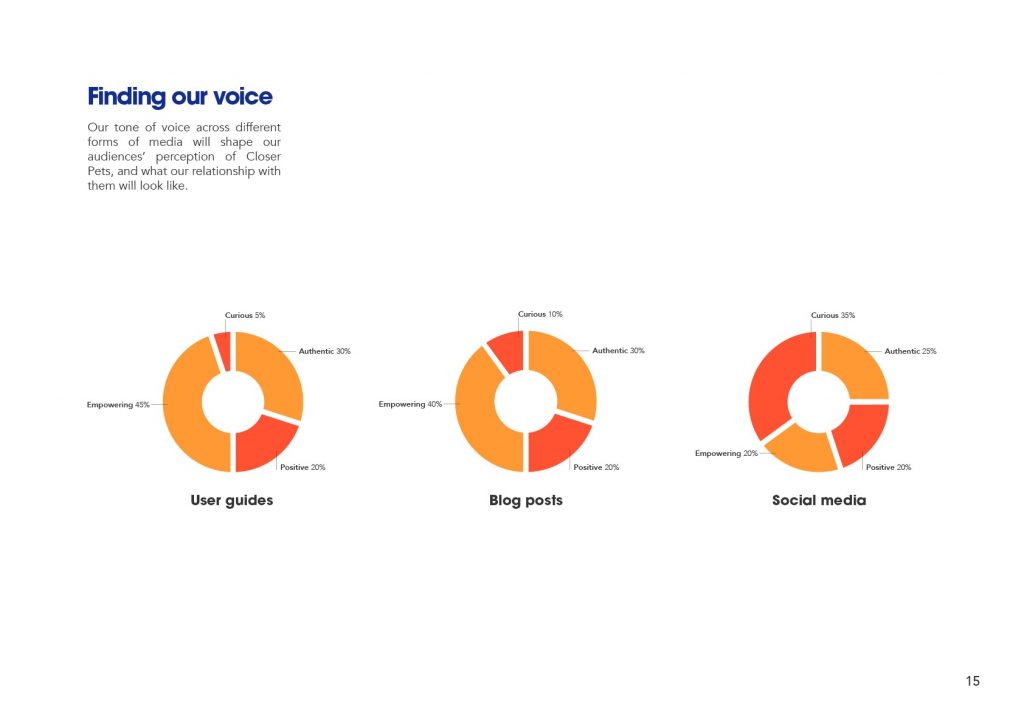
A snapshot of brand voice guidelines created for Closer Pets
Complete your own brand voice audit
A brand voice audit might sound daunting, but if you’re struggling to connect with your audience, five simple questions can help you get right back on track.
- If your brand were a person, who would they be?
Does your brand voice match the personality and values of your business? Where does it stand in the market? How does it stack up against competitors?
- What emotion do you want to evoke?
What are you actually trying to say to your audience? How do you want them to feel? Does your voice make your key propositions clear and compelling?
- Does it make your audience feel seen?
Does your brand voice involve your audience in the conversation? Does it speak directly to their pain points? Does it consider their preferences and behaviours?
- Is it consistent?
Are your team members consistently applying your brand voice, externally and internally? Yep, you want to keep that brand personality in employee comms too!
- Do you have a brand voice guide?
If your answer to question 4 is no, or even maybe, this is where a bespoke brand voice document can help.
Keeping it human
Ah, the elephant in the room! Brand voice being overlooked isn’t a new issue, but the avalanche of AI content hitting the web is doing an excellent job of amplifying it.
It all boils down to the question: If you don’t know what your brand voice is, how will AI?
And even if you do have a clear voice, the use of AI is a nuanced debate. It certainly has its place, but when it comes to connecting with your audience, it struggles to feel human.
Whose line is it, anyway?
For me, it all comes back to that curiosity. We’ll never be nosy about AI as a writer like we are about other people. If a blog has a whiff of robot about it, I’m outta there!
Although AI is undoubtedly a handy shortcut, remember that sometimes your customer wants the full journey, without the polish! Be transparent, admit where things haven’t gone to plan. How did mistakes made in product testing lead you to ultimately find the best solution? How did poor customer feedback motivate you to change your aftersales process?
People want you. Your story. Your quirks. Your hot takes. Give them something to be nosy about!
So, is your brand voice dead or alive?
Is it time to revive – or even refresh – your brand voice? Why not talk to the people who live and breathe language every day?
You might have noticed the tone of this blog. Conversational, candid, informative and – hopefully – empowering.
That’s our brand voice. Let’s find yours.

Ready to
work with us?
Want to collaborate?
Work with us
info@denfield.co.uk
Want to say hello?
Call us
01926 881178
