

“You’re braver than you believe, stronger than you seem, and smarter than you think.” For generations, Winnie the Pooh has been a symbol of comfort, friendship and childhood joy. As A.A. Milne’s iconic bear celebrates 100 years, Copywriter Rachel Welland takes a trip to the Hundred-Acre Wood – and explores the significance of powerful storytelling and nostalgia.
It’s hard to believe that a character so deeply woven into our, our parents’, our grandparents’ and maybe even our great-grandparents’ childhoods has reached such a milestone.
The “silly old bear” has captured generations of hearts – and it’s easy to understand why!
Winnie the Pooh first appeared in print in a short story titled The Wrong Sort of Bees published in the London Evening News on Christmas Eve 1925, before making his book debut in A.A. Milne’s Winnie the Pooh, published on 14 October 1926. Accompanied by E.H. Shepard’s instantly recognisable illustrations, the book introduced readers to Winnie the Pooh, Christopher Robin and the enchanting world of the Hundred-Acre Wood.
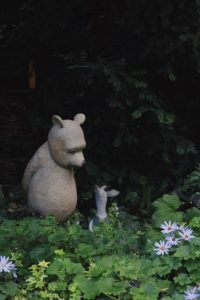
About the author: A.A. Milne
Before Winnie the Pooh, A.A. Milne was already an accomplished writer. He studied mathematics at Trinity College, Cambridge, edited the student magazine Granta and later worked for Punch, eventually becoming assistant editor.
Following the First World War, he established himself as a successful playwright, with works including Mr Pim Passes By, The Dover Road and his adaptation of Kenneth Grahame’s novel Toad of Toad Hall. But it was his children’s books, brought to life through his collaboration with illustrator E.H. Shepard, that would define his legacy.
Shepard’s distinctive illustrations became synonymous with Winnie the Pooh, appearing across When We Were Very Young, Winnie-the-Pooh, Now We Are Six and The House at Pooh Corner.
Yet the real inspiration behind the stories was much closer to home.
A father, a son and the Hundred-Acre Wood
Milne’s only child, Christopher Robin, was born in 1920 and became the inspiration for many of his stories.
At the family home, Cotchford Farm near Ashdown Forest, father and son would walk together while Milne invented stories to entertain him. Ashdown Forest inspired the Hundred-Acre Wood, while Christopher Robin’s toys inspired characters including Pooh, Piglet, Eeyore, Tigger, Kanga and Roo.
What began as a father entertaining his son became one of the most enduring stories in children’s literature.
Characters that continue to resonate
Part of Winnie the Pooh’s enduring appeal lies in the fact that the Hundred-Acre Wood isn’t populated by perfect characters. Instead, each friend has their own quirks, worries, strengths and weaknesses.
Winnie the Pooh may be a bear of very little brain, but his kindness and appreciation for life’s simple pleasures remind us to slow down. Piglet shows us that courage doesn’t mean being fearless, while Tigger’s infectious energy and optimism can lift everyone’s spirits. Rabbit brings practicality and organisation; Eeyore reminds us that it’s okay not to be cheerful all the time and Owl offers his own version of wisdom – whether it’s always accurate or not! Kanga provides a nurturing presence, while Roo represents the curiosity and enthusiasm of childhood.
Together, they create something remarkably familiar: a group of very different personalities who don’t always agree, but who continually show up for one another.
More than a children’s story: the marketing power of nostalgia
Perhaps the most fascinating part of Winnie the Pooh’s longevity is how the character has grown up alongside its audience.
For children, Winnie the Pooh represents imagination, adventure and wonder. For adults, he represents nostalgia – evoking memories of bedtime stories, treasured toys and childhood.
People attach memories, emotions and personal meaning to products, allowing them to become far more than the product itself. Familiarity creates an emotional shortcut between a brand and its audience, transforming recognition into connection and, ultimately, loyalty.
Winnie-the-Pooh demonstrates this beautifully, extending beyond books into toys, clothing, homeware, films and collectibles. The Royal Mint is also celebrating the centenary with specially designed 50p coins featuring Winnie-the-Pooh and his friends, turning a beloved childhood character into a tangible piece of nostalgia.
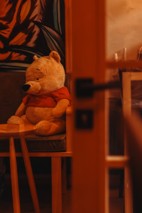
Why does Winnie the Pooh still resonate 100 years later?
Perhaps the answer is simple: life can be complicated. Winnie the Pooh isn’t.
His world reminds us that friendship matters, it’s okay to be afraid and happiness can often be found in the smallest things.
For children, Winnie the Pooh opens the door to imagination. For adults, he opens the door back to childhood. And for brands, he demonstrates the lasting power of emotional storytelling, familiarity and nostalgia.
What can your brand take from Winnie the Pooh’s century-long legacy? How can you use nostalgia to create meaningful customer experience?

Ready to
work with us?
Want to collaborate?
Work with us
info@denfield.co.uk
Want to say hello?
Call us
01926 881178
